Meta (formerly Facebook) / Shut down
The camera nobody wanted on the kitchen counter
From consumer and enterprise smart video calling hardware to wearable form factors like Ray-Ban Meta smart glasses and Quest mixed reality headsets.
- Lifespan
- Oct 2018 – Nov 2022
- Cause of death
- Trust & safetyWrong form factorPlatform shift
- Succeeded by
- Ray-Ban Meta smart glasses and Meta Quest headsets
- Epitaph
- “A video-calling camera that arrived just when nobody wanted Facebook in the living room.”
The full story
Facebook launched the Portal smart display in late 2018, featuring a camera that panned and zoomed across the living room to follow callers. Arriving in the shadow of Cambridge Analytica, the device faced deep consumer skepticism about surveillance. After an unsuccessful pivot to remote enterprise workers, Meta killed the line in late 2022.
The camera that could follow you across the room
In the autumn of 2018, Facebook’s Building 8 hardware lab had engineered something technically impressive.
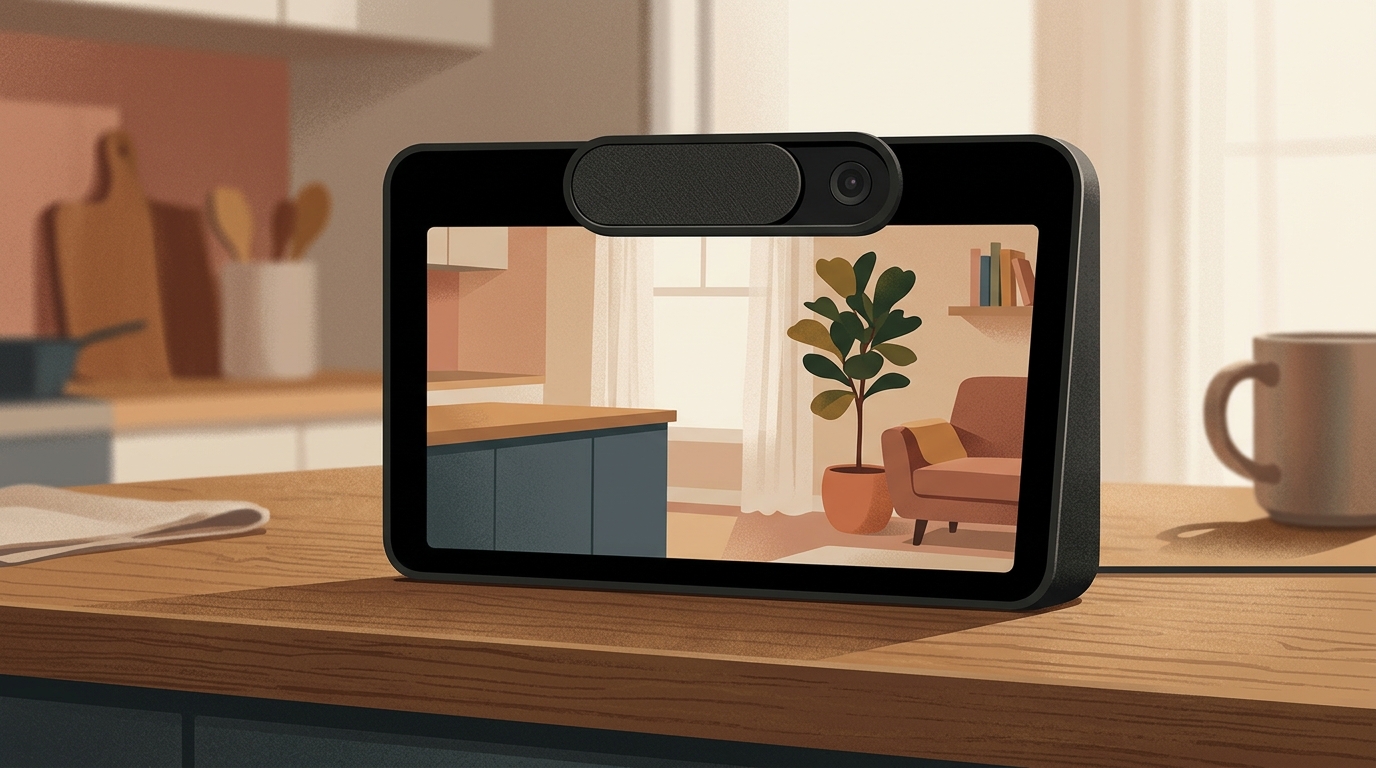
The product was Portal, a sleek tabletop smart display featuring an intelligent, AI-powered “Smart Camera.” Unlike static laptop webcams or the rigid lenses on Amazon’s Echo Show, Portal’s wide-angle camera used real-time computer vision to identify human bodies in the room. As you paced around the kitchen while cooking dinner or moved to comfort a child, the camera dynamically panned, zoomed, and reframed the shot to keep you perfectly centered. If a second person walked into the room, the camera smoothly zoomed out to include them both.
For families separated by distance, the experience was remarkably lifelike. Video calling through Messenger felt hands-free and cinematic. Technologically, Facebook had out-engineered both Amazon and Google in consumer video calling.
Yet Portal was burdened by a problem no amount of computer vision could solve: its creator’s reputation.
The shadow of Cambridge Analytica
Just seven months before Portal’s October 2018 announcement, the world learned of the Cambridge Analytica scandal. Revelations that the personal data of tens of millions of Facebook users had been harvested without consent to build political voter profiles triggered intense congressional scrutiny, regulatory investigations, and a global “#DeleteFacebook” campaign.
Consumer trust in the social network had collapsed to an all-time low. Suddenly, the company at the center of the largest privacy backlash in modern tech history was asking consumers to spend $199 to place an internet-connected, wide-angle, tracking camera directly onto their kitchen countertops and bedside tables.
The media reception was brutal. Wired’s review captured the dilemma: the hardware offered the best video calling on the market, but suffered from “the worst timing imaginable.” Reviewers noted the paradox: an AI camera that followed your movements around your private home, stamped with the logo of a company whose business model was surveillance advertising.
Facebook knew the headwind was severe. In its launch materials and packaging, the company took unprecedented measures to reassure paranoid buyers. It included a plastic physical camera cover in the box. It built an explicit hardware switch that electronically disconnected the camera and microphones. It emphasized that Portal’s Smart Camera ran computer-vision processing locally on device rather than in the cloud, and that Facebook did not listen to or retain video calls.
Yet for the vast majority of consumers, the psychological barrier was insurmountable. An Amazon Echo in the kitchen was an assistant that ordered paper towels; a Facebook Portal in the kitchen felt like an open window into their domestic life.
The pandemic lifeline and the hardware dilemma
Despite the privacy overhang, Portal found a temporary lifeline in the spring of 2020.
When COVID-19 lockdowns swept the globe, millions of elderly grandparents were cut off from their families, and knowledge workers scrambled to conduct all-day video calls from home desks. Demand for dedicated video-calling hardware surged. Facebook expanded the line, introducing the compact Portal Mini, the premium Portal+, and Portal TV—an accessory that perched atop living-room televisions.
For a brief window, Portal sales rose. Families who tried the device loved the tracking camera, and elderly relatives appreciated how easy it was to answer a call without fumbling with computer settings.
However, as society reopened in 2021, the market reality reasserted itself. Smart displays were a low-margin hardware category dominated by Amazon and Google, who used their Echo Show and Nest Hub devices as loss-leaders to anchor smart home ecosystems, sell subscriptions, and expand search. Facebook had no smart home ecosystem. It did not sell lightbulbs, thermostats, or security cameras. Once a user finished their Sunday call with family, Portal sat on the counter as an expensive digital photo frame that served little other purpose.
According to market research firms like IDC, Portal’s global market share in the smart display category lingered in the low single digits, lagging distantly behind Amazon and Google.
The desperate pivot to enterprise
By early 2022, Meta was facing intense macroeconomic pressures. Apple’s App Tracking Transparency changes on iOS had dealt a multibillion-dollar blow to Meta’s core advertising revenues, and the stock was tumbling.
In June 2022, Meta attempted a sharp pivot: it announced it would cease marketing Portal to everyday consumers and instead reposition the hardware as a dedicated business terminal for enterprise remote workers and corporate conference rooms.
The logic was plausible on paper. Knowledge workers suffered from “Zoom fatigue” and laptop camera strain; Portal supported Zoom, Webex, and Microsoft Teams, and its Smart Camera made home-office conferencing look professional.
In practice, the enterprise pivot was doomed from the start. Selling hardware to corporate IT departments requires an entirely different operational machinery: specialized sales teams, enterprise leasing agreements, SOC-2 security audits, Mobile Device Management (MDM) fleet controls, and bulk provisioning software. Portal was a consumer gadget wrapped in business software. IT administrators were wary of purchasing devices branded with Facebook’s name, and corporate procurement cycles were too slow to justify the ongoing overhead.
The guillotine in the “Year of Efficiency”
The final curtain fell five months later.
In November 2022, CEO Mark Zuckerberg announced that Meta would lay off more than 11,000 employees—13 percent of its workforce—to streamline operations and rein in ballooning costs inside Reality Labs.
In an internal town hall following the layoff announcement, Meta CTO Andrew Bosworth made the cancellation official. As reported by Reuters and The Verge, Bosworth told employees that attempting to break into the enterprise hardware market was simply no longer justifiable:
“It was just going to take so long, and take so much investment to get into the enterprise segment, it felt like the wrong way to invest your time and money.”
Meta canceled the entire Portal lineup, alongside two unreleased smartwatch prototypes under development inside Reality Labs. Commercial sales ended on December 31, 2022, with remaining inventory cleared out and existing units put on a countdown to eventual obsolescence.
Lessons for builders
The death of Portal offers an enduring lesson in the hierarchy of product attributes. Technical excellence cannot compensate for a toxic brand association in an intimate domain. A customer will tolerate an ad-supported feed on their phone, but inviting a camera into their living room requires an emotional contract of trust. When a company’s public reputation is defined by data extraction, building surveillance-sensitive hardware is an uphill battle against human nature.
Furthermore, Portal demonstrates the peril of the “enterprise pivot as a retirement home.” When consumer traction stalled, Meta attempted to rebrand the same hardware for business desks without building the necessary enterprise infrastructure. When corporate belt-tightening arrived, half-hearted pivots were swiftly abandoned.
Meta ultimately found its hardware footing where privacy fears were superseded by personal utility: in its Quest mixed reality headsets and its runaway hit Ray-Ban Meta smart glasses. In those form factors, consumers understood the exchange. On the kitchen counter, Portal was simply an answer to a question nobody wanted Facebook to ask.
Our reading
What the record suggests.
The public record demonstrates that Portal possessed genuinely superior camera-tracking technology compared to contemporary Amazon Echo Show and Google Nest Hub devices. However, the Cambridge Analytica revelations in early 2018 permanently compromised Facebook's consumer trust profile. Meta never disclosed exact unit sales, but third-party market trackers consistently placed Portal at low single-digit market shares throughout its four-year existence.
For founders and product teams
What to take from it.
- Brand trust precedes device adoption. No matter how fluid your hardware or intelligent your computer-vision camera, asking users to place a networked microphone and lens in their home requires goodwill your company must already possess.
- A hardware feature cannot outrun its primary company narrative. Facebook spent millions emphasizing local camera processing and physical privacy shutters, but consumers could not separate the hardware from headline scandals.
- Pivoting hardware from consumer to enterprise is rarely a quick fix. Enterprise video requires IT fleet provisioning, deep Zoom/Teams integrations, SOC-2 certifications, and corporate procurement channels that consumer hardware cannot wing on the fly.
- In a corporate restructuring, niche hardware with high unit costs and small market share is always first on the chopping block. When Meta announced 11,000 layoffs, Portal was terminated immediately.
Sources
Check the evidence.
- Meta Newsroom · Introducing Portal and Portal+ (2018)
- Reuters · Meta to lay off more than 11,000 staff, shuts Portal
- The Verge · Meta is shutting down its Portal smart displays
- Wired · Facebook Portal review: the best video calling, the worst timing
- Variety · Meta shifts Portal away from consumers to enterprise