Tiny Speck (now Slack Technologies) / Pivoted
The game that left behind a chat room
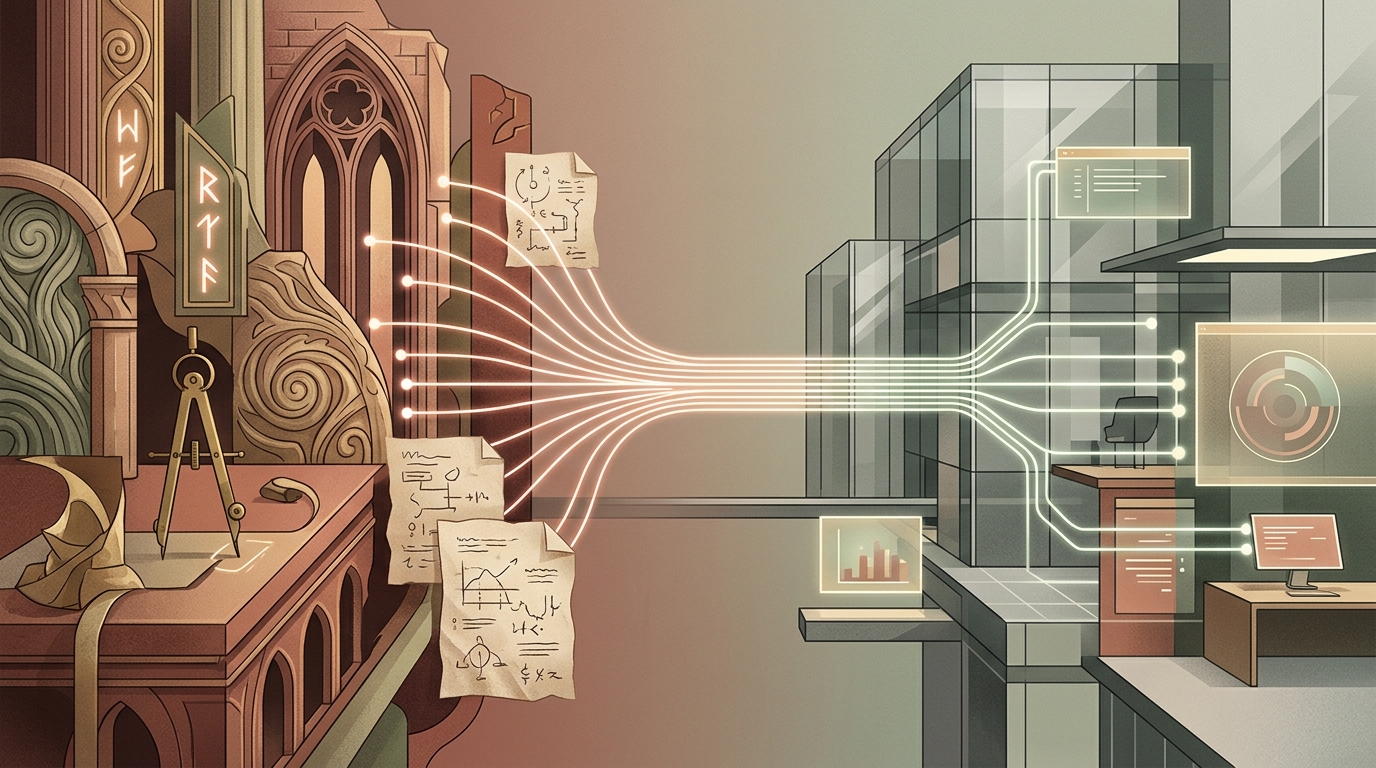
From a Flash-based multiplayer game for consumers to a workplace messaging product built from the studio's own internal tool.
- Lifespan
- Sep 2011 – Dec 2012
- Succeeded by
- Slack, the team messaging product launched publicly in February 2014
- Epitaph
- “Too strange to scale, too beautiful to forget. Its back office became the product.”
The full story
Tiny Speck spent years and more than $15 million building Glitch, a whimsical browser MMO, then shut it down in December 2012. The team's internal chat tool became Slack, which Salesforce bought for about $27 billion.
A neverending game, again
Stewart Butterfield had tried this before. In the early 2000s his company Ludicorp built Game Neverending, an online world that couldn’t support a business. A photo-sharing feature built for the game became Flickr, which Yahoo bought. WIRED’s 2014 profile called that one of the original pivots. After a few years at Yahoo, Butterfield left to try the game again.
He founded the new company, Tiny Speck, in 2009 with Cal Henderson, Eric Costello and Serguei Mourachov, according to TechCrunch. Its game, Glitch, ran in a web browser on Adobe Flash. It was a cooperative world set inside the imaginations of eleven giants, with hand-drawn art, odd writing and no combat to speak of. Investors backed it heavily. TechCrunch later reported more than $15 million raised before beta and a staff of more than 40. In April 2011 Tiny Speck raised a $10.7 million Series B from Andreessen Horowitz and Accel, and Butterfield said “tens of thousands” of people were waiting to get in.
The bet had two parts. Creatively, Tiny Speck believed a gentle, collaborative online world could find a large audience. Technically, it believed a browser and Flash were enough to deliver a rich multiplayer game without a download.
Launch, then unlaunch
Glitch officially launched in September 2011. About two months later, Tiny Speck did something unusual and took the game back into beta, calling it an “unlaunch.” GamesBeat reported that the game had more than 100,000 users at the time. Butterfield named two problems. New players needed to “get into the fun faster,” and engaged players needed creative tools to change the world in bigger ways, such as building locations and forming groups. He promised refunds to anyone who felt they had not got their money’s worth.
That diagnosis is worth noticing. The team wasn’t saying the game was broken. It was saying newcomers bounced off it while the most committed players ran out of things to do. Both problems would be expensive to fix in a content-heavy game.
The decision on a bridge
Another year of work followed. In October 2012, according to WIRED, Butterfield walked across Vauxhall Bridge in London with his old high-school friend Alexander Gilly, who had helped brainstorm Glitch’s premise years earlier. He told Gilly the game had to end. Gilly told WIRED that Butterfield was sad but sure, because “they weren’t getting the numbers necessary to make it viable.” Later that month Butterfield told his investors and co-founders. Forty-eight hours after that he told the team, gathering staff in Vancouver and dialing in the employees in San Francisco. WIRED reports he was crying on the call.
TechCrunch reported that Tiny Speck had also tried and failed to find a buyer for the game, and that about 30 people were losing their jobs.
The closing letter
The public announcement arrived in mid-November 2012. Tiny Speck’s closing letter is one of the frankest shutdown notices a startup has published. It opens: “This is a horrible day.” The world would close on December 9 at 8pm Pacific. New sign-ups were disabled, automatic refunds started immediately, and purchases going back to November 2011 qualified.
The letter gives three reasons. First, Glitch “has not attracted an audience large enough to sustain itself.” Second, after “a long period of experimentation,” the team judged that it probably never would. Third, it pointed to the industry’s direction: the move to mobile and “the continued decline of the Flash platform on which Glitch was built.” In the FAQ, the team wrote that it had hoped to build a game that was both creatively and financially successful, “But we only managed to create a crazy, beautiful game.”
One line in the FAQ, read in hindsight, matters most. Tiny Speck would carry on, because “we have developed some unique messaging technology with applications outside of the gaming world,” and a smaller core team would build new products from it. The letter refused to say more: “now is not the time to talk about that.” It also included a “Hire a Specker” page for laid-off staff.
WIRED adds that the team uploaded an archive of the game’s art, music and code and released much of it to the public domain, and that Butterfield “managed to not burn through” all of the investors’ money. That leftover money gave the company options.
The investors’ accounts, which TechCrunch collected later, show those options weren’t guaranteed. Accel’s Andrew Braccia said in a 2015 interview, quoted by TechCrunch, that he and Butterfield discussed whether to return the money. He also said he told Butterfield, “If you want to continue to be an entrepreneur and build something, then I’m with you.” Ben Horowitz, whose firm also backed Tiny Speck, told Kara Swisher in 2015 that the messaging tool first struck him as “a really horrible idea.” He had doubted whether such an artistic founder wanted to run an enterprise software company. TechCrunch says Andreessen Horowitz disputes reports that it pushed hard on Butterfield. The disagreement is a useful reminder that a pivot’s survival can depend on who is willing to keep funding it.
The tool nobody was selling
What was the messaging technology? Slack’s own 2019 S-1 tells the founders’ version. It says the team built Slack as an internal tool “to help our own team stay on the same page,” frustrated that email kept information “hidden in individual inboxes” and that new hires couldn’t see earlier discussions. “What we needed did not exist. So we built it.” Butterfield told TechCrunch that working this way was “hugely a productive way of working.” Accounts from the period describe the tool as having grown out of the studio’s IRC habits, but the S-1 does not go into technical lineage, and the exact path from IRC scripts to product is mostly told in secondary retellings.
Development of Slack as a product started at the beginning of 2013. Johnny Rodgers and Ali Rayl, early employees who later documented the period on Building Slack, date the start of work to 13 months before public launch. An early alpha came out nine months before launch and a “preview release” six months before.
Selling horseback riding
On July 31, 2013, two weeks before the preview release, Butterfield sent the team a long memo. He published it in 2014 as “We Don’t Sell Saddles Here,” and it shows how the Glitch lessons carried over.
The memo admits the core problem directly: people “have no idea that they want Slack.” Few people, Butterfield wrote, were shopping for “a group chat system.” So Slack would sell something larger: “what we’re selling is organizational transformation.” His analogy was a saddle maker that sells horseback riding rather than leather quality. Because Slack was asking users to give up years of email habits, he argued, the execution had to be close to perfect. A person who doesn’t yet know they want something has little patience for flaws.
Read alongside the Glitch letter, the memo connects to it. Glitch had asked newcomers to learn a strange world, and too many of them didn’t stay. Slack was also asking a lot, and the memo puts smooth onboarding and “petty irritations” at the center of the work.
What replaced it
Slack opened its preview in August 2013 and launched publicly on February 12, 2014. The company renamed itself from Tiny Speck to Slack Technologies in 2014, per the S-1. By August 2014, WIRED was listing dozens of paying customers, from Buzzfeed to eBay, and quoting Butterfield saying the company could be sold “right now for a billion dollars.” The early employees’ account says active users grew from about 15,000 to over 500,000 in the first year.
The S-1 reported more than 10 million daily active users and more than 88,000 paid customers as of early 2019. These are company-reported figures, and the filing credits growth “largely” to word of mouth. Slack went public through a direct listing in June 2019. Salesforce agreed to buy it in December 2020 and completed the acquisition on July 21, 2021, recording consideration of about $27.1 billion.
What the record cannot tell us
The first-person record here is strong: a closing letter, a strategy memo and an S-1, with WIRED’s reporting on how the decision was made. Some things are still missing. Tiny Speck never published Glitch’s active-player or revenue figures, so “not large enough” stays a judgment we can’t check. The internal threshold Butterfield used in October 2012 isn’t known. How much cash survived the shutdown is also undisclosed. WIRED says only that not all of it was spent, and later retellings differ.
Most important, Glitch’s failure doesn’t explain Slack’s success. The same team, under the same founder, failed a second time at a game and succeeded at a business tool. That pattern is striking, but it has many possible explanations, including team, timing, the rise of cloud software and the money still in the bank. The safest reading is narrower. Tiny Speck admitted early that its main bet was not working, closed it carefully, and recognized that the strongest evidence of demand was a tool its own people relied on every day.
Our reading
What the record suggests.
The record is unusually rich in the founder's own words. It shows a team that judged Glitch could not reach a sustainable audience, then reused its internal messaging technology. It cannot show that Slack's success came from the Glitch experience instead of timing, team quality or capital, and Glitch's real audience and revenue were never disclosed.
For founders and product teams
What to take from it.
- Look at the tools your team built for itself and won't give up. Tiny Speck's best evidence of demand was its own daily use of a chat system no customer had ever seen.
- A shutdown with money left in the bank buys you options. Butterfield closed Glitch before the capital ran out, which left enough runway for a small team to build and test Slack.
- When nobody is shopping for your category, sell the outcome rather than the feature list. The 'saddles' memo framed Slack as organizational change, not group chat.
- Name the technical ceiling you are running into. Glitch's closing letter blamed Flash's decline and the move to mobile, which told the team its next product could not live in a plugin.
Sources
Check the evidence.
- Tiny Speck · A sad announcement from Tiny Speck (Glitch closing letter, archived)
- Stewart Butterfield (Medium) · We Don't Sell Saddles Here
- SEC · Slack Technologies Form S-1 (2019)
- SEC · Salesforce Form 8-K on completing the Slack acquisition (2021)
- WIRED · The Most Fascinating Profile You'll Ever Read About a Guy and His Boring Startup
- TechCrunch · As Flickr co-founder Butterfield shuts down Glitch
- TechCrunch · Glitch beta next week and $10.7 million in new funds
- GamesBeat · Tiny Speck "unlaunches" its Glitch game
- Building Slack (early employees) · Year 1
- TechCrunch · The Slack origin story