Rabbit / Refocused
The pocket companion with cloud scripts
From a standalone hardware device meant to replace smartphones and apps to a niche experimental gadget iterating on over-the-air firmware updates.
- Lifespan
- Jan 2024 – Still alive
- Cause of death
- Wrong form factorTrust & safetyUnclear job-to-be-done
- Succeeded by
- RabbitOS 2 and community 'vibe-coding' hobbyist updates
- Epitaph
- “Sold a smartphone killer for $199. Delivered an Android 13 phone running a cloud browser script.”
The full story
Rabbit sold over 100,000 retro-orange R1 devices on promises of a 'Large Action Model' that would replace smartphones, only for teardowns to reveal an Android launcher executing fragile cloud Playwright scripts.
The keynote that stole CES
In January 2024, at the Consumer Electronics Show in Las Vegas, a boutique hardware startup called Rabbit Inc. staged one of the most viral tech product launches since the original iPhone.
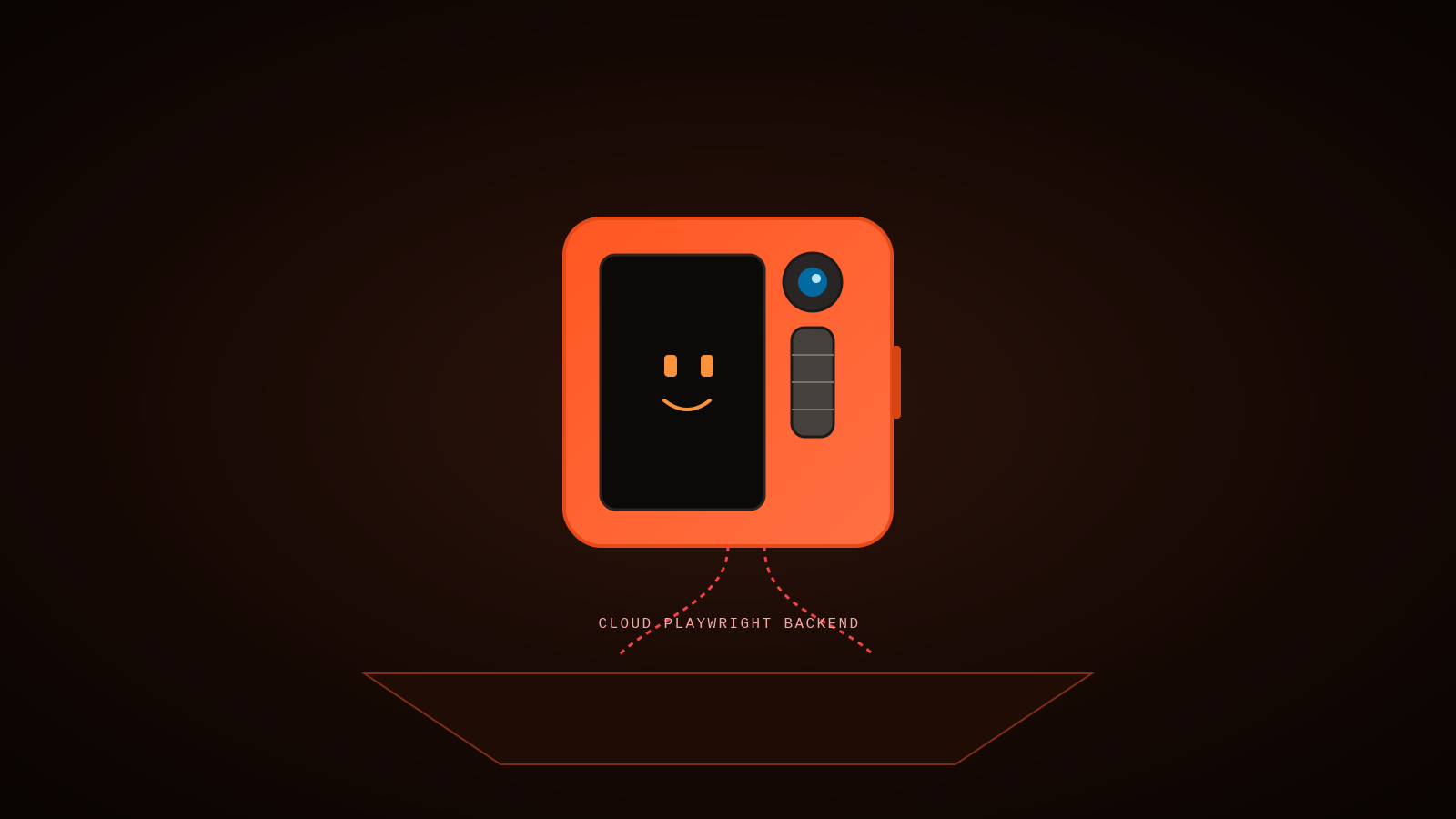
Rabbit CEO Jesse Lyu, sporting a bright yellow hoodie, unveiled the Rabbit R1. Designed in collaboration with cult Swedish design firm Teenage Engineering, the device was gorgeous: a compact, pocket-sized square of retro-luminous orange plastic, complete with a tiny 2.88-inch touchscreen, an analog scroll wheel, a 360-degree rotating camera eye, and a satisfying tactile push-to-talk button.
Best of all was the price: $199 with no monthly subscription.
Lyu pitched the R1 as the antidote to modern smartphone fatigue. Instead of endless notifications, app stores, and dark patterns, the R1 was powered by Rabbit OS and a revolutionary proprietary AI architecture: the Large Action Model (LAM).
The promise was breathtaking. Rather than simply generating text like ChatGPT, the LAM was supposedly trained to “learn how humans use software.” It could book an Uber ride, order a burrito on DoorDash, queue up a Spotify playlist, or plan a vacation—all from a single spoken voice command, without the user ever touching an app.
The internet went wild. Rabbit sold out its initial 10,000-unit batch in twenty-four hours. By March, more than 100,000 preorders had been booked.
The unboxing disaster
In late April 2024, the first batch of Rabbit R1 units arrived on the doorsteps of tech journalists and excited early adopters.
The verdict was immediate, unanimous, and devastating.
Far from being a lightning-fast digital companion, the R1 was painfully slow and unreliable:
- Simple voice queries took anywhere from eight to twenty seconds to return answers, and frequently timed out entirely.
- The battery drained in four to five hours of light use, causing the device to overheat in users’ pockets.
- Tasks that worked cleanly in the keynote—such as ordering food on DoorDash or hailing an Uber—consistently failed or required tedious authentication loops on a cumbersome desktop web portal (the “Rabbithole”).
- Marques Brownlee (MKBHD) released a review titled “The Rabbit R1 Is Barely Reviewable,” warning his millions of viewers not to buy the device.
The APK teardown and the Playwright revelation
Within days of release, the mystique of Rabbit’s proprietary “Large Action Model” unraveled completely under technical scrutiny.
First, Android developers extracted the Rabbit OS software image. To the community’s astonishment, they discovered that Rabbit OS was not a bespoke operating system at all; it was a standard, lightly skinned build of open-source Android 13 (AOSP) running on a budget $50 MediaTek Helio P35 processor. Developers quickly demonstrated that the entire Rabbit interface could be sideloaded and run seamlessly as a simple third-party .apk app on any $150 Google Pixel or Motorola smartphone.
Second, security researchers inspected the network traffic passing between the R1 and Rabbit’s cloud infrastructure.
The sophisticated “Large Action Model” that supposedly understood software interaction from first principles was, in reality, a collection of fragile headless browser scripts running on cloud servers via Playwright. When a user asked the R1 to order an Uber, the device wasn’t executing a revolutionary AI cognitive leap; it was spinning up a virtual Chrome browser in the cloud, having a script mimic button clicks on the Uber mobile website, and sending the result back.
The moment Uber or DoorDash changed an HTML element or pushed a CAPTCHA verification, the entire integration broke down.
The graveyard lesson
While Rabbit managed to survive into 2025 and 2026 by shipping constant over-the-air firmware updates (RabbitOS 2) and repositioning itself as a quirky gadget for AI hobbyists, its original dream of killing the smartphone was completely dead. Within months of shipment, reports indicated that daily active usage had collapsed to a few thousand lingering enthusiasts.
The lesson of the Rabbit R1 is fundamental to modern hardware:
Hardware cannot fix a software illusion.
Wrapping brittle cloud scripts and generic LLM APIs in beautiful industrial plastic creates great TikTok videos and impressive preorder sales, but it cannot survive contact with real-world users. A dedicated hardware gadget must be ten times faster and significantly more reliable than the smartphone already resting in the user’s pocket.
When your dedicated AI device is slower, buggier, and more fragile than launching the free ChatGPT app on an iPhone, it is not a smartphone killer. It is digital landfill with a Teenage Engineering shell.
Our reading
What the record suggests.
The public record documents Rabbit's viral CES 2024 launch keynote, Jesse Lyu's claims regarding the Large Action Model (LAM), over 100,000 preorders sold, and the subsequent devastating wave of critical reviews from tech reviewers including Marques Brownlee. Subsequent technical teardowns by security researchers documented that the device ran an Android AOSP build and routed actions through cloud browser automation. Rabbit remained operational, pushing software updates and RabbitOS 2 throughout 2025. The record cannot independently establish Rabbit's exact active daily retention numbers.
For founders and product teams
What to take from it.
- Hardware cannot compensate for an unfinished software agent. Packaging an unproven AI model in gorgeous industrial design by Teenage Engineering creates viral hype, but amplifies user disappointment the day it arrives.
- Brittle robotic process automation is not a Large Action Model. Routing user credentials through virtual cloud browsers running Playwright scripts breaks the moment DoorDash, Spotify, or Uber updates their HTML.
- Your product is competing against the computer already in every pocket. If an AI device is slower, buggier, and less reliable than the smartphone sitting in the user's right pocket, it will end up in a drawer.
Sources